
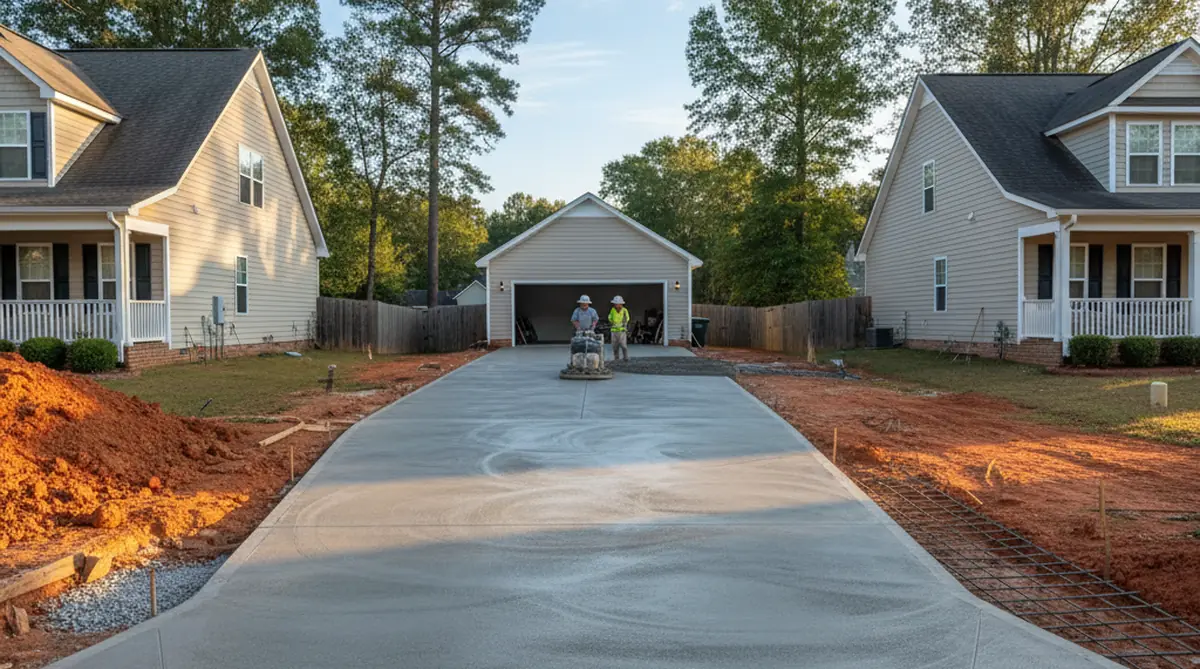
Concrete Driveway Repair Guide for Sumter SC: Fix Cracks & Settling
By Dubya Concrete | September 27, 2026 | 8 min read
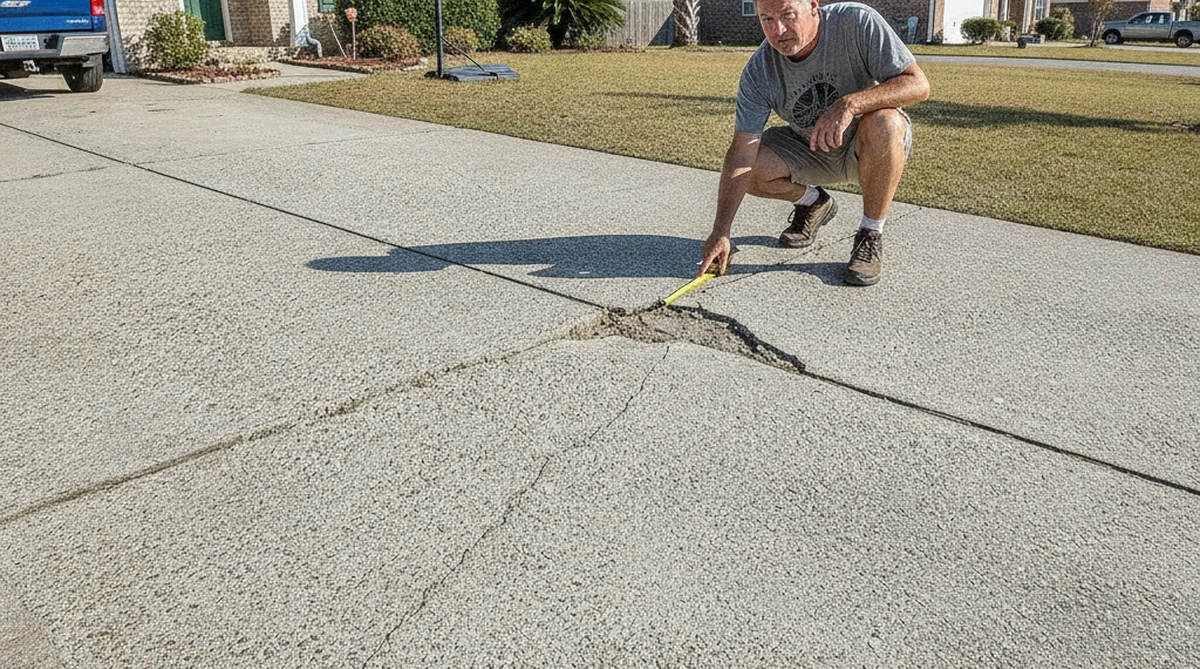
Concrete driveway repair in Sumter, SC typically involves filling cracks with epoxy or polyurethane sealants, mudjacking or foam injection to lift settled sections, and resurfacing damaged areas to restore both function and curb appeal. Most homeowners can address minor cracks themselves, but settling, large cracks, or structural issues require professional concrete repair services.
What Causes Concrete Driveways to Crack and Settle in Sumter?
Concrete driveways in Sumter, SC face unique challenges due to the region's clay-heavy soils, high humidity, and temperature fluctuations throughout the year. The expansive clay soils common throughout Orangeburg County absorb water during Sumter's frequent summer thunderstorms and then contract during dry periods, creating movement beneath your concrete slab that leads to cracking and settling. Tree roots from the many mature oaks and pines in Sumter neighborhoods can also push up sections of driveways, while freeze-thaw cycles during occasional winter cold snaps cause water trapped in small cracks to expand and worsen the damage.
Additionally, poorly compacted soil during initial installation, inadequate base preparation, or drainage issues that allow water to pool beneath the slab all contribute to premature concrete failure. Understanding these local conditions helps homeowners recognize problems early and address them before minor issues become major repairs.
How Do You Identify Different Types of Driveway Damage?
Different types of concrete damage require different repair approaches, so proper identification is the first step to effective repairs. Hairline cracks less than 1/8 inch wide are typically cosmetic and result from normal concrete curing, though they can allow water infiltration if left unsealed. Wider structural cracks exceeding 1/4 inch often indicate soil settlement, excessive load stress, or foundation movement and require more substantial intervention.
Settling or sinking sections create uneven surfaces where one portion of your driveway sits lower than adjacent areas, often caused by soil erosion or compaction beneath the slab. Spalling—where the concrete surface flakes, chips, or pits—results from moisture penetration, freeze-thaw damage, or deicing salt exposure. Heaving occurs when tree roots or expansive soils push sections upward, creating trip hazards and drainage problems. If you're unsure about the severity of damage to your Sumter driveway, a professional inspection can determine whether simple patching or more extensive repair methods are needed.
What Are the Best DIY Methods for Minor Crack Repair?
Homeowners can successfully repair minor cracks (under 1/4 inch) using readily available concrete repair products from local Sumter hardware stores. Start by thoroughly cleaning the crack with a wire brush and shop vacuum to remove all loose debris, dirt, and vegetation, then rinse with water and allow the area to dry completely.
For narrow cracks, use a concrete crack filler or liquid crack sealer applied with a caulking gun, ensuring the product penetrates deeply into the crack. Wider cracks benefit from vinyl concrete patching compound, which you can trowel into the crack slightly above the surrounding surface to account for settling. After application, smooth the repair with a trowel and allow proper curing time according to product instructions.
For best results, apply sealers during dry weather with temperatures between 50-90°F—conditions commonly found during Sumter's spring and fall months. Keep in mind that DIY repairs work well for cosmetic issues but won't address underlying soil problems that cause structural cracks or settling.
When Should You Consider Professional Mudjacking or Foam Injection?
Professional lifting techniques like mudjacking (slabjacking) or polyurethane foam injection are the most cost-effective solutions when sections of your driveway have settled or sunk. These methods raise concrete back to its original level without the expense and disruption of complete replacement, typically costing 50-70% less than tearing out and pouring new concrete.
Mudjacking involves drilling strategic holes in the sunken slab and pumping a cement-based slurry underneath to fill voids and lift the concrete. Polyurethane foam injection uses similar access holes but injects expanding foam that cures quickly and adds minimal weight to the underlying soil—particularly beneficial for Sumter's clay soils that struggle with heavy loads.
These professional solutions work best when the concrete itself remains structurally sound but has simply settled due to soil erosion or compaction. If you notice your driveway sloping away from your garage, creating trip hazards at transitions, or pooling water in new locations, call the local concrete experts at Dubya Concrete at (803) 855-1859 to evaluate whether lifting is appropriate for your situation.
How Do You Repair Severe Damage and Spalling?
Severe cracking, extensive spalling, or structural damage often requires partial or complete concrete replacement to ensure long-term durability. Surface spalling can sometimes be addressed with concrete resurfacing products that bond to the existing slab and create a new wearing surface, restoring both appearance and protection against further moisture intrusion.
When damage affects large areas or extends deep into the slab, removing and replacing the affected sections becomes necessary. This involves cutting out the damaged concrete, properly preparing the base with compacted gravel, ensuring proper drainage, and pouring new concrete that matches the existing driveway in thickness and finish. Proper base preparation is especially critical in Sumter due to the area's soil conditions.
As a local concrete contractor specializing in driveways, patios, slabs, sidewalks, foundations, and decorative and stamped concrete throughout Orangeburg County, Dubya Concrete understands the specific soil and climate challenges that affect concrete longevity in this region. Professional repairs include proper reinforcement, control joints, and finishing techniques that help prevent future damage.
What Preventive Maintenance Extends Driveway Life?
Preventive maintenance significantly extends the lifespan of your Sumter concrete driveway and minimizes the need for costly repairs. Apply a quality concrete sealer every 2-3 years to protect against moisture penetration, freeze-thaw damage, and staining—particularly important given Sumter's humid climate and occasional winter freezes.
Maintain proper drainage by keeping gutters clean and ensuring downspouts direct water away from the driveway, and fill any settled areas near the slab edges where water can pool and erode supporting soil. Clean oil stains promptly, avoid using deicing salts during winter freezes (opt for sand instead), and address small cracks immediately before they expand into larger problems.
- Seal cracks promptly: Small cracks sealed early prevent water infiltration and soil erosion beneath the slab
- Control water exposure: Proper grading and drainage prevent the soil movement that causes settling
- Limit heavy loads: Avoid parking heavy equipment or dumpsters in the same spot repeatedly
- Regular cleaning: Remove debris, leaves, and standing water that can deteriorate the surface
- Professional inspections: Annual inspections catch developing problems before they require major repairs
By combining proper maintenance with prompt repairs when issues arise, Sumter homeowners can expect their concrete driveways to provide decades of reliable service even in challenging local conditions.
Frequently Asked Questions
How much does concrete driveway repair typically cost in Sumter, SC?
Minor crack repairs in Sumter typically cost $200-$500 for DIY materials or professional patching, while mudjacking or foam injection to lift settled sections ranges from $600-$2,000 depending on the area affected. Complete driveway replacement costs $4-$10 per square foot, making lifting and repair options significantly more economical when the concrete itself remains structurally sound.
Can I repair my concrete driveway in winter in Sumter?
Most concrete repair products require temperatures above 50°F for proper curing, which can be challenging during Sumter's coldest winter months of December through February. For best results, schedule non-emergency repairs during spring or fall when temperatures are consistently moderate, though professionals can often work year-round using specialized cold-weather products and techniques.
How long does a repaired concrete driveway last?
Properly executed professional repairs using quality materials can last 5-10 years or longer, especially when combined with regular sealing and maintenance. The longevity depends on the repair method used, the underlying cause of the damage, soil conditions, and how well the driveway is maintained after repair.
Should I repair or replace my cracked concrete driveway?
Repair is typically the best option when damage affects less than 30% of the driveway surface, the concrete is at least 1/4 inch thick, and cracks are primarily cosmetic or caused by settling rather than structural failure. Replacement makes more sense when damage is extensive, the slab is deteriorating throughout, or the driveway is approaching 25-30 years old with multiple ongoing issues.
What's the difference between mudjacking and foam injection for driveway repair?
Mudjacking pumps a heavy cement-sand-soil mixture under the slab to fill voids and lift concrete, while polyurethane foam injection uses lightweight expanding foam that cures in minutes and adds minimal weight. Foam injection typically costs 25-50% more but works better in weak soils like Sumter's clay, cures faster, and requires smaller injection holes than traditional mudjacking.
Published September 27, 2026 | Dubya Concrete serves Orangeburg, Sumter, Summerville, Bamberg, Holly Hill, and surrounding counties in the SC Midlands.