
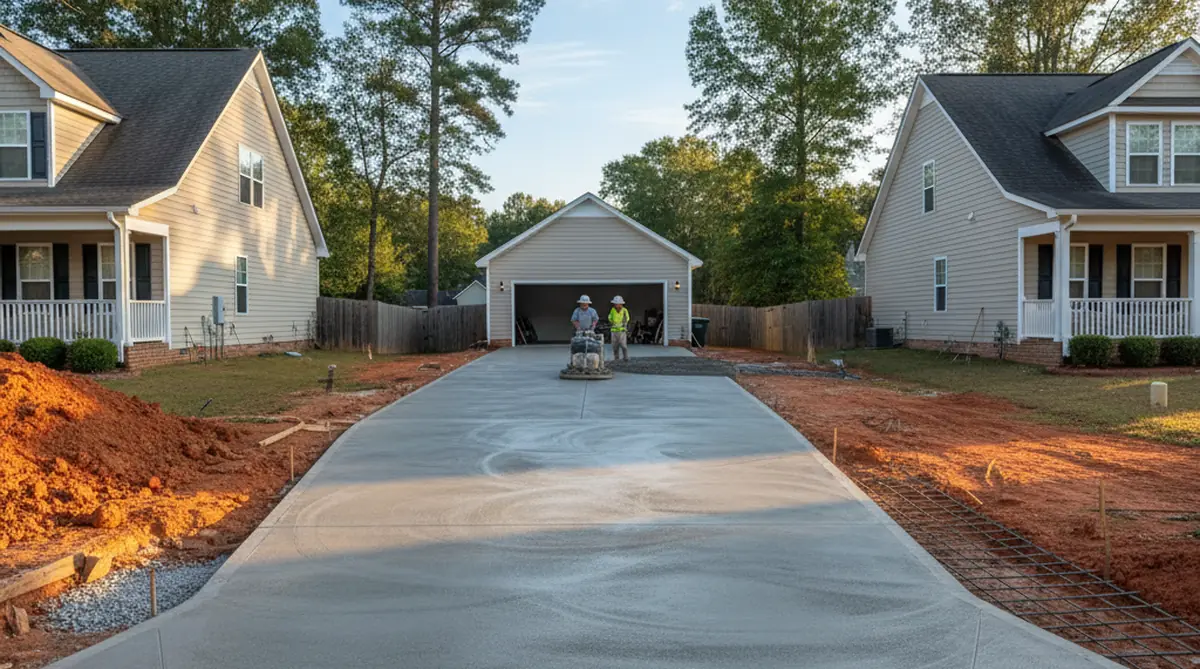
Concrete Driveway Apron Installation Guide for Cordova SC Homes
By Dubya Concrete | June 28, 2026 | 8 min read
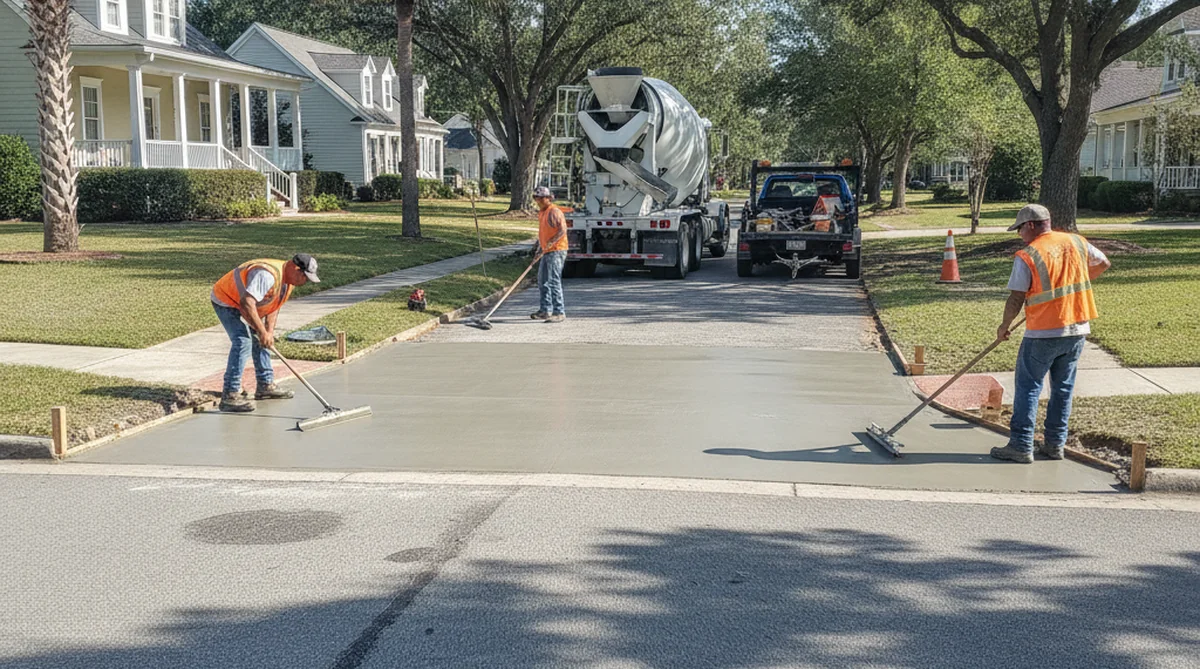
A concrete driveway apron connects your residential driveway to the public street, providing a smooth transition that enhances curb appeal and prevents erosion in Cordova, SC homes. Professional installation ensures proper grading, drainage, and compliance with Orangeburg County regulations while creating a durable entrance that withstands daily vehicle traffic.
What Is a Driveway Apron and Why Do Cordova Homes Need One?
A driveway apron is the section of paving that connects your private driveway to the public roadway, typically extending from the street edge to your property line. In Cordova and throughout Orangeburg County, this transitional area experiences constant vehicle traffic, weather exposure, and drainage challenges that require a durable concrete solution. Without a properly installed apron, homeowners often face crumbling edges, soil erosion, water pooling, and an unkempt appearance that diminishes property value.
Concrete aprons offer superior longevity compared to asphalt alternatives, especially in South Carolina's humid subtropical climate where temperature fluctuations and heavy rainfall are common. The apron also serves a functional role in stormwater management, directing runoff away from your foundation and toward street drainage systems. For Cordova residents looking to upgrade their home's entrance, a professionally installed concrete apron provides both aesthetic appeal and practical benefits that last for decades.
Understanding Orangeburg County Permit Requirements for Driveway Aprons
Before installing a driveway apron in Cordova, you must obtain the necessary permits from Orangeburg County and potentially coordinate with the South Carolina Department of Transportation if your property fronts a state-maintained road. The permitting process ensures your apron meets width specifications, slope requirements, and drainage standards that protect both your property and public infrastructure. Most residential aprons require a right-of-way permit, and the county will inspect the work to verify compliance with local codes.
Working with an experienced local concrete contractor like Dubya Concrete simplifies the permitting process, as we're familiar with Orangeburg County's specific requirements and maintain established relationships with local inspectors. We handle the paperwork, ensure proper setbacks from utilities, and design your apron to meet all regulatory standards. Attempting DIY installation without proper permits can result in fines, required removal of non-compliant work, and complications when selling your home.
Preparing the Site: Excavation and Grading for Proper Drainage
Site preparation begins with excavating the apron area to a depth of 6-8 inches, removing existing materials, vegetation, and loose soil that could compromise the concrete's stability. Proper grading is critical in Cordova, where heavy spring and summer rains can quickly overwhelm poorly designed drainage systems. The apron should slope away from your property at approximately 2% grade while also transitioning smoothly to match the street elevation.
After excavation, we install a compacted gravel base layer—typically 4-6 inches of crushed stone—that provides stability, prevents settling, and facilitates drainage beneath the concrete. This base layer is especially important in areas of Orangeburg County with clay-heavy soils that expand and contract with moisture changes. For added durability, we may recommend installing reinforcement such as:
- Welded wire mesh for crack resistance in standard installations
- Rebar grid for heavy-load applications or larger aprons
- Fiber reinforcement mixed into the concrete for additional tensile strength
- Expansion joints where the apron meets existing driveways or structures
Choosing the Right Concrete Mix and Thickness for South Carolina Weather
The concrete mix for your Cordova driveway apron should have a minimum compressive strength of 4,000 PSI to withstand vehicle loads and South Carolina's freeze-thaw cycles. We typically recommend a 6-inch thickness for residential aprons, though homes with larger vehicles or increased traffic may benefit from 8-inch pours. The mix design should include air entrainment to resist cracking from temperature changes and a proper water-cement ratio to ensure long-term durability.
At Dubya Concrete, we specialize in driveways, patios, slabs, sidewalks, foundations, and decorative and stamped concrete projects throughout Orangeburg County. For apron installations, we can match existing concrete on your property or incorporate decorative finishes like exposed aggregate, colored concrete, or stamped patterns that complement Cordova's residential architecture. The finishing technique you select affects both aesthetics and traction, with broom finishes providing excellent slip resistance for the sloped apron surface.
Ready to install a professional concrete driveway apron for your Cordova home? Call Dubya Concrete at (803) 855-1859 for a free consultation and estimate tailored to your property's specific needs.
The Installation Process: Pouring, Finishing, and Curing
Concrete installation day requires careful coordination to ensure quality results, beginning with forming the apron boundaries with wooden or metal forms that define the shape and contain the wet concrete. We pour the concrete in sections if needed, using proper consolidation techniques to eliminate air pockets and ensure the mix fully surrounds any reinforcement. Screeding and floating create a level surface that follows the engineered grade, while edging tools create clean borders along the forms.
Finishing work begins once the concrete reaches the right consistency, with techniques varying based on your chosen aesthetic. A standard broom finish involves dragging stiff bristles across the surface to create texture, while stamped or decorative applications require specialized timing and tools. Control joints are cut or formed at strategic intervals to direct any cracking that may occur as the concrete cures and settles.
Proper curing is essential in Cordova's warm climate, where rapid evaporation can compromise concrete strength. We apply curing compounds or cover the apron with plastic sheeting to retain moisture for at least seven days. During this period, vehicle traffic must be avoided, and the concrete should be kept consistently moist. Full strength develops over 28 days, though light foot traffic is typically safe after 24-48 hours.
Maintaining Your Concrete Apron for Long-Term Performance
A well-installed concrete driveway apron requires minimal maintenance but benefits from periodic care to maximize its lifespan in Orangeburg County's climate. Seal the concrete every 2-3 years with a quality penetrating sealer to protect against moisture intrusion, freeze-thaw damage, and staining from vehicle fluids. Clean the surface regularly with a pressure washer to remove dirt, debris, and organic growth that can make the apron slippery or unsightly.
Address minor cracks promptly with concrete crack filler to prevent water infiltration that leads to larger structural problems. Monitor the edges where the apron meets the street, as this transition area experiences the most stress and may require occasional repair. Avoid using deicing salts during rare winter freezes, as these chemicals can deteriorate the concrete surface over time. With proper installation by a local concrete contractor and regular maintenance, your Cordova driveway apron will provide decades of reliable service while enhancing your home's curb appeal and property value.
Frequently Asked Questions
How much does a concrete driveway apron cost in Cordova, SC?
Concrete driveway apron costs in Cordova typically range from $8 to $15 per square foot, depending on thickness, reinforcement, and decorative finishes. Most residential aprons measure 10-15 feet wide and 15-25 feet long, resulting in total project costs between $1,200 and $5,600 including excavation, materials, and labor.
Do I need a permit to install a driveway apron in Orangeburg County?
Yes, Orangeburg County requires a right-of-way permit for driveway apron installations that connect to public roadways. The permit process ensures your apron meets local width, slope, and drainage requirements, and an inspection is typically required before the project is finalized.
How long does it take to install a concrete driveway apron?
The physical installation of a concrete driveway apron typically takes 1-2 days, including excavation, base preparation, and concrete pouring. However, the concrete requires at least 7 days of curing before vehicle traffic is allowed, and full strength develops over 28 days.
What's the difference between a driveway apron and a regular driveway?
A driveway apron specifically refers to the transitional section connecting your private driveway to the public street, often located within the public right-of-way. The apron must meet stricter specifications for slope, drainage, and construction than your private driveway and may be subject to municipal maintenance requirements.
Can I install a decorative or stamped concrete apron in Cordova?
Yes, decorative and stamped concrete aprons are permitted in Cordova, though the surface must maintain adequate traction for the sloped transition area. Popular options include colored concrete, exposed aggregate, and stamped patterns that complement your home's style while meeting safety and drainage requirements.
Published June 28, 2026 | Dubya Concrete serves Orangeburg, Sumter, Summerville, Bamberg, Holly Hill, and surrounding counties in the SC Midlands.