
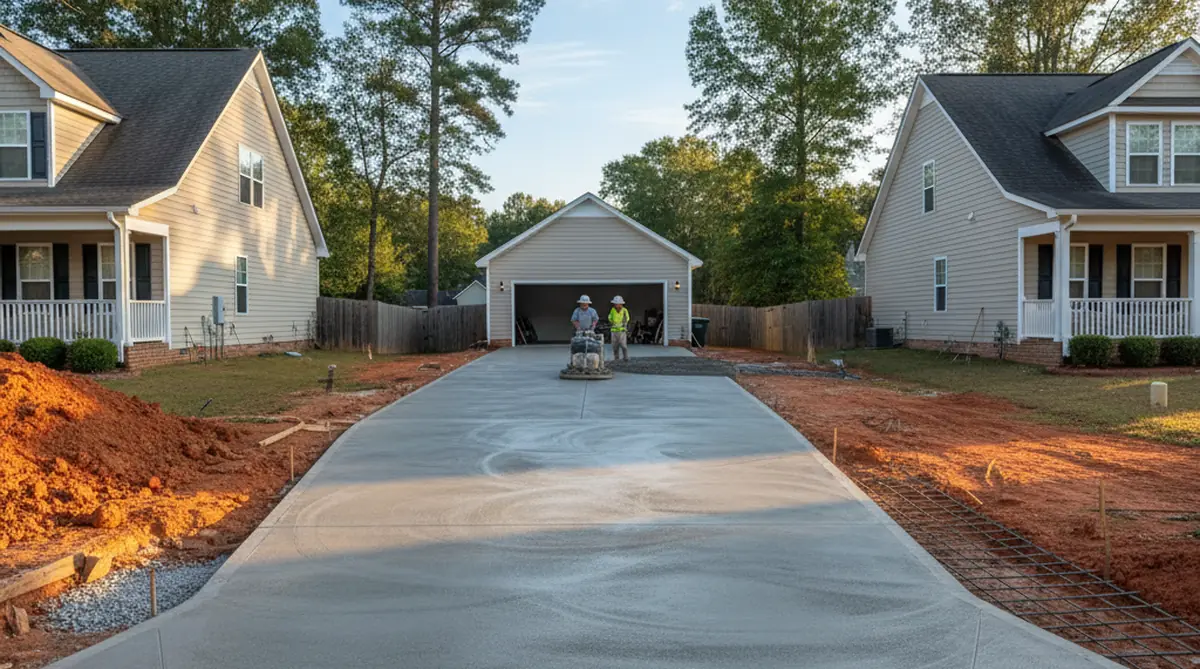
Concrete Patio Thickness Guide for Holly Hill SC Homeowners
By Dubya Concrete | July 19, 2026 | 8 min read
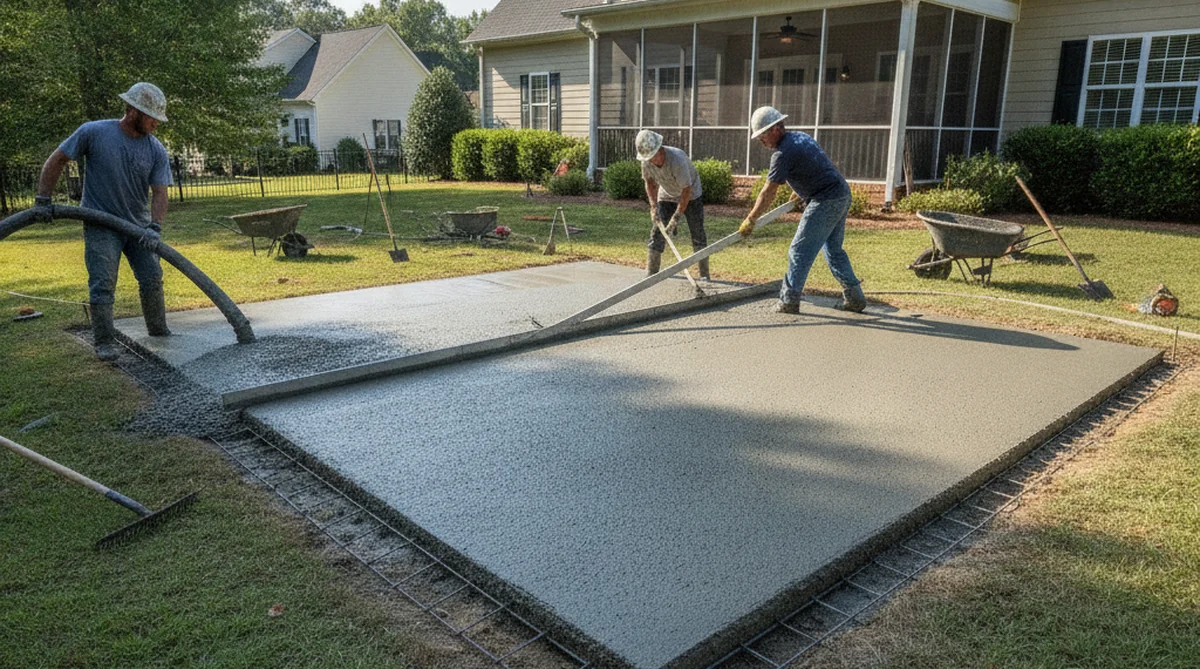
For most residential concrete patios in Holly Hill, SC, the recommended thickness is 4 inches for standard use, though high-traffic areas or patios supporting heavy furniture may require 5-6 inches of thickness for optimal durability and longevity.
What Is the Standard Concrete Patio Thickness in Holly Hill?
The standard concrete patio thickness for Holly Hill homeowners is 4 inches. This measurement provides adequate strength for typical residential use, including outdoor furniture, grills, and regular foot traffic. A 4-inch thick patio built with proper base preparation can last decades in Orangeburg County's climate, withstanding our hot, humid summers and occasional freezing temperatures in winter.
However, thickness isn't the only consideration. The concrete mix quality, proper ground preparation, and adequate reinforcement all work together to create a durable patio surface. At Dubya Concrete, we've installed countless patios throughout Holly Hill and understand how local soil conditions and climate patterns affect concrete performance.
When Should You Increase Patio Thickness to 5 or 6 Inches?
You should increase your concrete patio thickness to 5-6 inches when you plan to place heavy structures, outdoor kitchens, hot tubs, or expect frequent heavy equipment traffic. Thicker concrete distributes weight more effectively and reduces the risk of cracking under concentrated loads.
Consider increasing thickness in these situations:
- Outdoor kitchens: Built-in grills, counters, and stone features add significant weight
- Hot tubs or spa installations: When filled, these can weigh several thousand pounds
- Vehicle traffic: If your patio doubles as overflow parking for boats, trailers, or RVs
- Poor soil conditions: Some areas of Holly Hill have expansive clay soils that require additional thickness
- Large spans without joints: Bigger patios with fewer control joints benefit from extra thickness
For homeowners in Holly Hill who want to invest in long-term durability, the additional cost of an extra inch or two of concrete is typically worthwhile. Our team at Dubya Concrete can assess your specific property conditions and recommend the right thickness for your project.
How Does Base Preparation Affect Your Concrete Patio?
Proper base preparation is just as critical as concrete thickness, requiring a compacted 4-6 inch gravel base to prevent settling and cracking. Even perfectly thick concrete will fail prematurely if installed over poorly prepared ground.
The base preparation process includes several key steps. First, we excavate to the proper depth, removing organic material and loose soil. Next, we install a gravel base (typically crushed stone or gravel) and compact it thoroughly using mechanical compactors. This creates a stable, well-draining foundation that won't shift or settle over time.
In Orangeburg County, where we experience significant rainfall throughout the year, proper drainage is essential. The gravel base allows water to drain away from the concrete rather than pooling underneath, which can cause erosion, settling, and eventually cracking. For Holly Hill properties with clay-heavy soils, this drainage layer becomes even more important to prevent moisture-related problems.
Should Your Holly Hill Patio Include Reinforcement?
Yes, reinforcing your concrete patio with wire mesh or rebar significantly improves its structural integrity and crack resistance. While 4-inch residential patios don't always legally require reinforcement, adding it is an inexpensive upgrade that provides substantial long-term benefits.
Common reinforcement options include:
- Wire mesh (WWF): 6x6 inch welded wire fabric positioned in the middle third of the concrete slab
- Rebar grid: #3 or #4 rebar spaced 18-24 inches apart for heavier applications
- Fiber reinforcement: Synthetic fibers mixed into the concrete to reduce surface cracking
If you're planning a decorative or stamped concrete patio—one of our specialties at Dubya Concrete—reinforcement becomes especially important. These finishes represent a significant investment, and proper reinforcement helps protect that investment by minimizing cracks that could disrupt your decorative pattern.
Ready to discuss your patio project? Call Dubya Concrete at (803) 855-1859 to schedule a free consultation and estimate for your Holly Hill property.
What Concrete Mix Strength Do You Need?
A concrete mix with a minimum compressive strength of 3,000-3,500 PSI is recommended for residential patios in Holly Hill, providing adequate durability for South Carolina weather conditions. This strength rating ensures your patio can handle freeze-thaw cycles, temperature fluctuations, and the occasional heavy load without deteriorating prematurely.
For standard patios, a 3,000 PSI mix is typically sufficient. However, we often recommend 3,500-4,000 PSI for patios that will see heavier use or exposure to more extreme conditions. Higher PSI concrete costs slightly more but delivers better long-term performance, especially for decorative finishes that homeowners want to maintain in pristine condition for years.
The concrete mix should also include proper air entrainment (typically 5-7% air content) to improve freeze-thaw resistance. While Holly Hill doesn't experience severe winters, we do get occasional freezing temperatures, and air-entrained concrete handles these temperature swings much better than non-air-entrained mixes.
How Do Local Conditions in Holly Hill Affect Patio Thickness?
Holly Hill's clay-rich soils and humid subtropical climate make proper thickness and drainage particularly important for concrete patio longevity. The expansive clay soils common throughout Orangeburg County can swell when wet and shrink when dry, creating movement that stresses concrete slabs.
To address these local conditions, many Holly Hill contractors—including our experienced team at Dubya Concrete—recommend these adjustments:
- Slightly thicker slabs (going with 5 inches instead of 4 inches) in areas with known soil issues
- Extra attention to base compaction and drainage to manage moisture effectively
- Proper control joints spaced every 8-10 feet to allow for natural expansion and contraction
- Adequate slope (typically 1/4 inch per foot) to ensure water runs off rather than pooling
Our local expertise matters when it comes to concrete installation. As a local concrete contractor serving Holly Hill and surrounding Orangeburg County communities, we've seen how different soil types, drainage patterns, and property characteristics affect patio performance. Whether you need a simple concrete slab, a decorative stamped patio, or a complex outdoor living space, we apply this local knowledge to every project.
The right thickness for your concrete patio depends on your specific usage plans, soil conditions, and budget. While 4 inches works for most applications, don't hesitate to invest in additional thickness when your project demands it. A well-built patio becomes an extension of your home's living space and a valuable feature that enhances your property for decades to come.
Frequently Asked Questions
How thick should a concrete patio be for patio furniture?
A 4-inch thick concrete patio is sufficient for standard patio furniture including tables, chairs, and umbrellas. This thickness easily supports typical residential furniture weights and regular foot traffic without risk of cracking or structural issues.
Can I pour a 3-inch concrete patio to save money?
A 3-inch patio is not recommended for most residential applications as it lacks adequate strength and durability. The minimal cost savings will likely result in premature cracking and failure, requiring expensive repairs or replacement within just a few years.
Do I need rebar in a 4-inch concrete patio?
While not always required by code, adding wire mesh or rebar to a 4-inch patio is highly recommended. Reinforcement significantly reduces cracking and improves longevity, making it a worthwhile investment that costs relatively little compared to the overall project.
How thick should concrete be for a hot tub patio?
A hot tub patio should be at least 6 inches thick to safely support the combined weight of the tub, water, and occupants, which often exceeds 5,000 pounds. This application should also include rebar reinforcement and be engineered for the concentrated load.
What happens if my patio concrete is too thin?
Concrete that's too thin will develop cracks quickly, especially under load or temperature changes. Thin concrete lacks the structural capacity to bridge minor base imperfections and will likely fail prematurely, requiring costly removal and replacement.
Published July 19, 2026 | Dubya Concrete serves Orangeburg, Sumter, Summerville, Bamberg, Holly Hill, and surrounding counties in the SC Midlands.